
Quick Answer
Private label sunglasses give you full control over branding and higher margin potential, but they typically require a larger order commitment and a marketing plan to build awareness from scratch. Wholesale branded sunglasses ship faster, carry lower order minimums, and reduce your marketing burden, but leave you competing on price against anyone else carrying the same styles. Newer or smaller accounts generally do better leaning wholesale first, then layering in private label once volume and shelf space can support it. Most established accounts run both side by side rather than choosing one exclusively. Reach out to our team through the West Coast Sunglasses site to talk through which mix fits your current stage.
Two Paths, Two Different Businesses
Private label and wholesale branded sunglasses are not simply two flavors of the same product. They ask a retailer to run two different kinds of businesses. Wholesale branded sunglasses ask you to be a great merchandiser, someone who knows what is trending and gets it on the shelf fast. Private label sunglasses ask you to be a brand builder, someone willing to invest in packaging, positioning, and repeat customer loyalty around a name that only your store carries.
Neither path is inherently better. The right answer depends on where your business is today, how much shelf space and marketing capacity you have, and how much of your growth strategy depends on being recognized as a distinct brand rather than a convenient place to buy sunglasses.
Side by Side Comparison
Factor | Private Label | Wholesale Branded |
Brand control | Full control over name, logo, and packaging | None. You are selling an existing brand identity |
Typical order minimum | Higher, often by case or full run | Lower, frequently sold by the dozen |
Speed to shelf | Slower, requires setup and sometimes tooling | Fast, product ships as soon as it is ordered |
Margin potential | Higher, since there is no competing seller of the same SKU | Moderate, since price competition exists on recognized items |
Marketing lift required | Higher, the retailer builds all brand awareness | Lower, the name may already carry some recognition |
Best fit | Established accounts with steady volume and a marketing plan | New or growing accounts that need flexibility and fast turns |
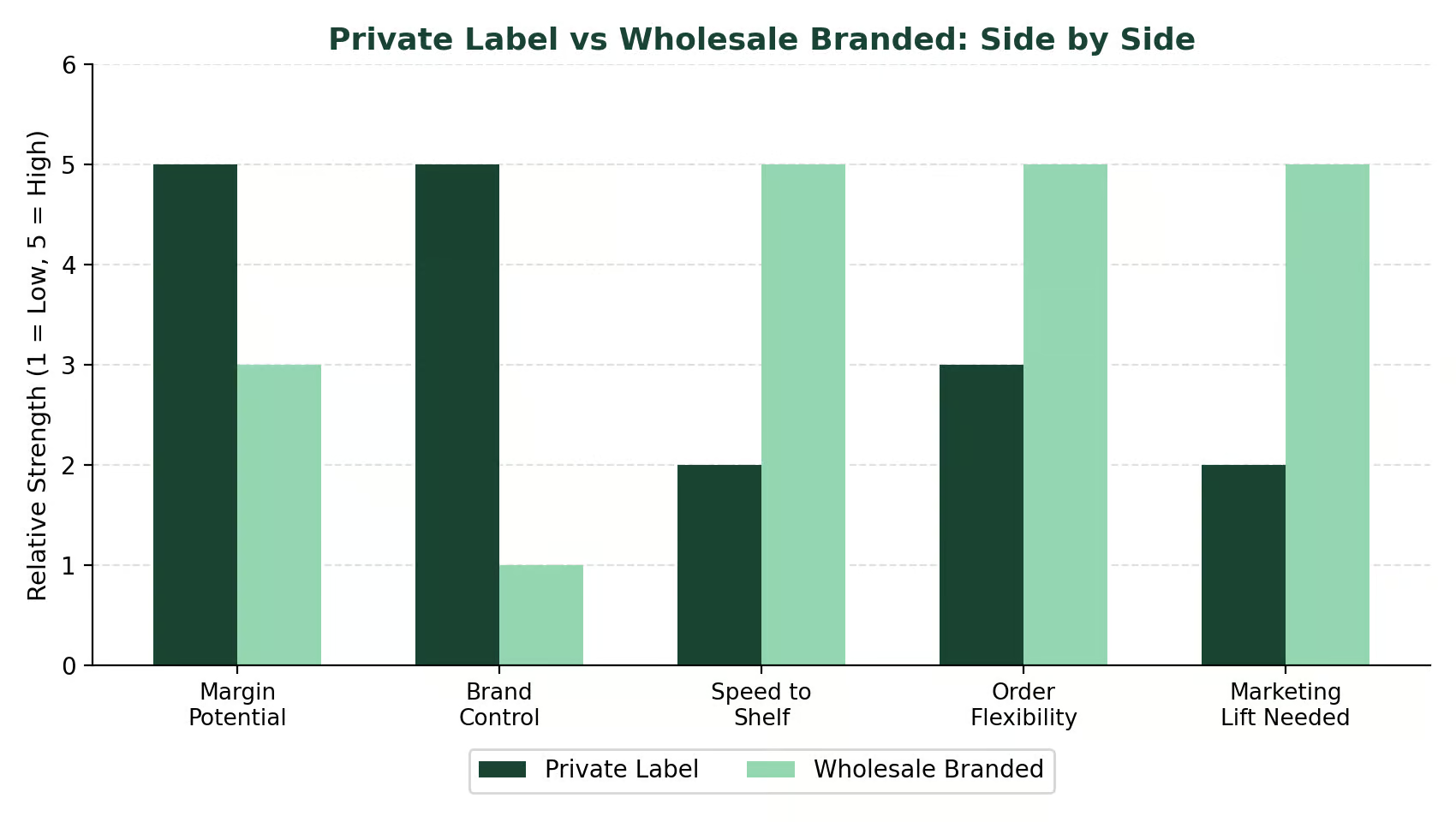
Figure 1: Relative strengths of private label versus wholesale branded sunglasses across five common decision factors.
The Case for Wholesale Branded Glasses
Wholesale branded sunglasses remain the fastest way to fill a rack and start moving product. Because you are ordering existing styles in existing packaging, there is no design cycle, no tooling, and typically a lower order minimum, which keeps cash tied up in inventory to a minimum while you learn what actually sells at your location.
This model also removes almost all the marketing burden from your shoulders. Many wholesale styles already carry some level of shopper familiarity, whether through general style recognition or prior exposure at other retailers, so you are not starting from zero every time you introduce a new style to your counter.
The tradeoff is margin and differentiation. If a competitor two blocks away carries the same wholesale styles, your only real lever is price, which compresses margin over time. Our Sport Collection and seasonal fashion lines are built to give wholesale accounts styles that turn quickly while still standing apart from generic assortments.
The Case for Private Label Glasses
Private label sunglasses put your name on the frame and your story on the packaging. Once a shopper connects a specific pair with your store rather than a national brand, you own that relationship in a way wholesale product cannot replicate. No other retailer can offer the exact same product, which removes direct price comparison and protects margin.
Private label also compounds over time. A wholesale reorder is just a reorder, but a private label program builds brand equity that supports everything from repeat visits to word of mouth referrals to a stronger position if you ever expand into ecommerce or additional locations.
The cost of that control is commitment. Private label typically requires larger order minimums, longer lead times for the first run, and a willingness to market the line yourself rather than relying on existing brand recognition. It performs best for accounts that already have consistent volume and some marketing infrastructure in place, whether that is an email list, social following, or steady foot traffic.
How the Right Mix Shifts as You Grow
Very few successful retailers run one model exclusively. Most blend the two, using wholesale branded product to stay current and fill in trend driven demand while gradually building a private label program that becomes a larger share of the assortment as volume grows.
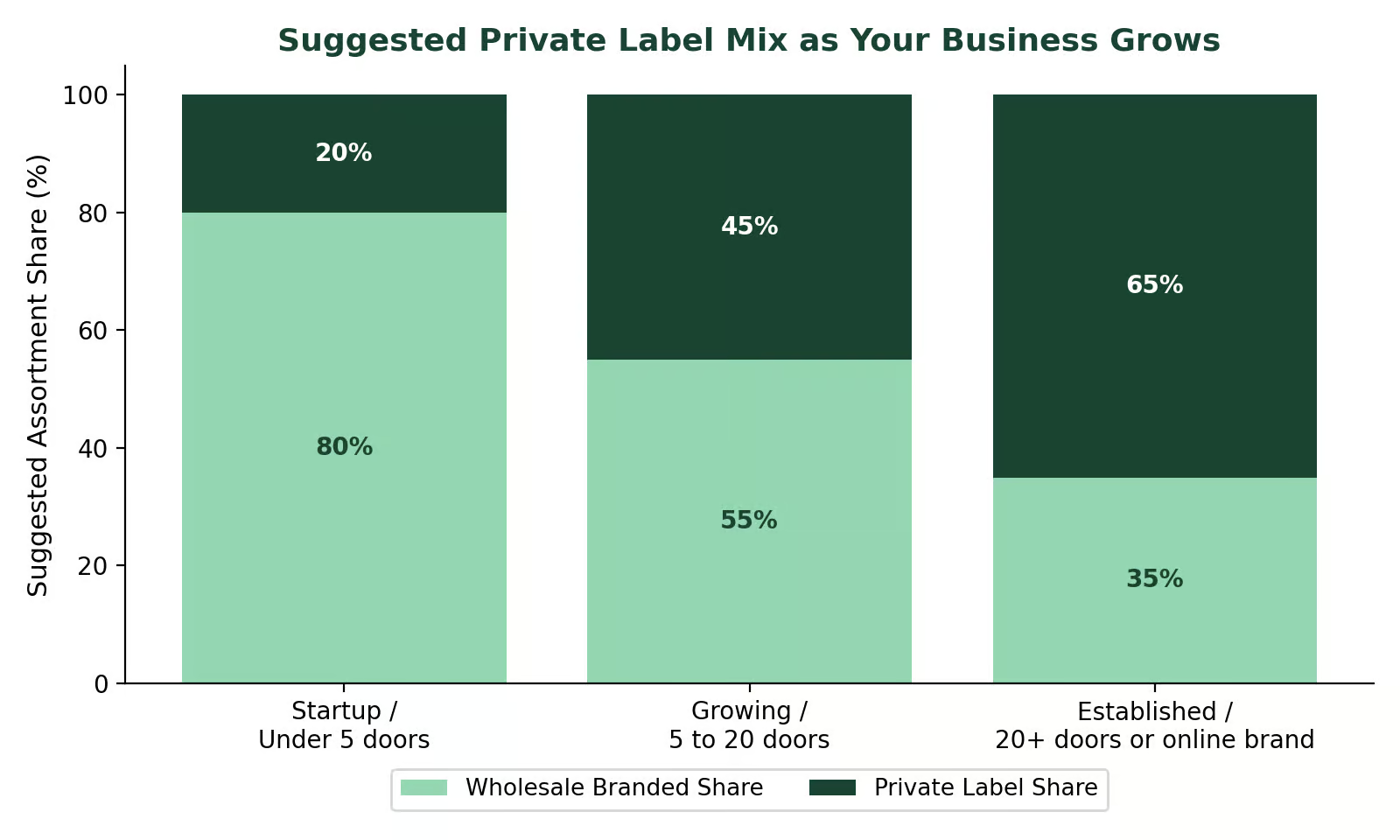
Figure 2: A general guide for how private label share might grow alongside your business.
A newer account with fewer than five doors or a single counter typically leans heavily wholesale, since order minimums and marketing capacity are both limited. As volume grows into the five to twenty door range, private label becomes worth testing on a smaller portion of the assortment. Established accounts with twenty or more doors, or a strong online presence, often find private label makes up the majority of their most profitable SKUs, while wholesale product still plays an important role in filling seasonal trend gaps quickly.
Questions to Ask Before You Decide
- Do you have consistent enough volume to support a larger order commitment without tying up too much cash in one run
- Do you have a way to market a private label line, even something as simple as an email list or a loyal in store following
- How much shelf space can you dedicate to testing a new line before it needs to prove itself
- Is your local competition already saturated with the same wholesale styles you would be ordering
- Are you building toward a long term brand identity, or do you need flexibility to chase trends season to season
Frequently Asked Questions
Can I run private label and wholesale branded sunglasses at the same time?
Yes, and most established accounts do exactly that. Wholesale branded product fills in fast moving trends and keeps order minimums manageable, while private label builds long term brand equity on your best performing styles.
Does private label mean I am designing the frames myself?
Not necessarily. Private label typically means your branding, packaging, and sometimes color or lens choices go on an existing frame platform, rather than designing a frame from scratch. This keeps lead times and costs far more manageable than true custom manufacturing.
Is private label only worth it for large retailers?
No, but it does perform best once you have steady enough volume to support the order commitment and some way to market the line. A smaller account can still test private label on a limited run before committing a larger share of the assortment.
What happens if a private label style does not sell well?
This is the main risk of the model. Since no other retailer carries the same product, there is no shared demand to fall back on if a style underperforms, which is why starting with a smaller test run is worth considering before committing to a full private label program.
How do I know when it is time to shift more of my assortment to private label?
Watch for consistent sell through on your wholesale styles paired with repeat customers asking for your store by name rather than a specific brand. That combination usually signals your customer base is ready to follow you into a private label line.
Talk Through Your Assortment Strategy
West Coast Sunglasses supports both models, with wholesale branded lines ready to ship and private label programs for accounts ready to build their own identity. Call us at 727-530-9260 to talk through what fits your business right now, or review account setup details on our FAQs page and browse current styles in our wholesale catalog.




 No products in the cart.