| Quick Answer
Durable wholesale sunglasses for beach, pool and waterfront shoppers come down to four things: polycarbonate lenses and frames that shrug off drops, corrosion resistant hardware that survives salt air, lens coatings and polarized film that are protected from heat, and a simple care message that keeps sunscreen and sand from ruining a new pair in its first week.
Retailers who buy with those four points in mind see fewer returns, fewer unhappy guests, and more repeat purchases from shoppers who trust that the pair they bought will last the trip. |
A pair of sunglasses sold in a waterfront shop lives a harder life than almost any other accessory in the store. It goes straight from the register to a pool lounger, a boat deck, a beach bag full of sand, or the dashboard of a rental car. Within hours it has been splashed with salt water, smeared with sunscreen, and baked in direct sun.
That is why durability matters more for coastal and resort retailers than it does for a mall kiosk or a convenience store counter. A shopper who buys a pair on day one of a vacation will notice by day three whether it held up. If it did, they come back for a second pair for a family member. If it did not, the store hears about it at the counter, in a review, or both.
This guide breaks down what actually damages sunglasses in sun and surf environments, which product features hold up best, how to store inventory so it reaches the shelf in perfect condition, and how a simple care message at the register protects both the guest and your margin.
What Actually Damages Sunglasses Near the Water
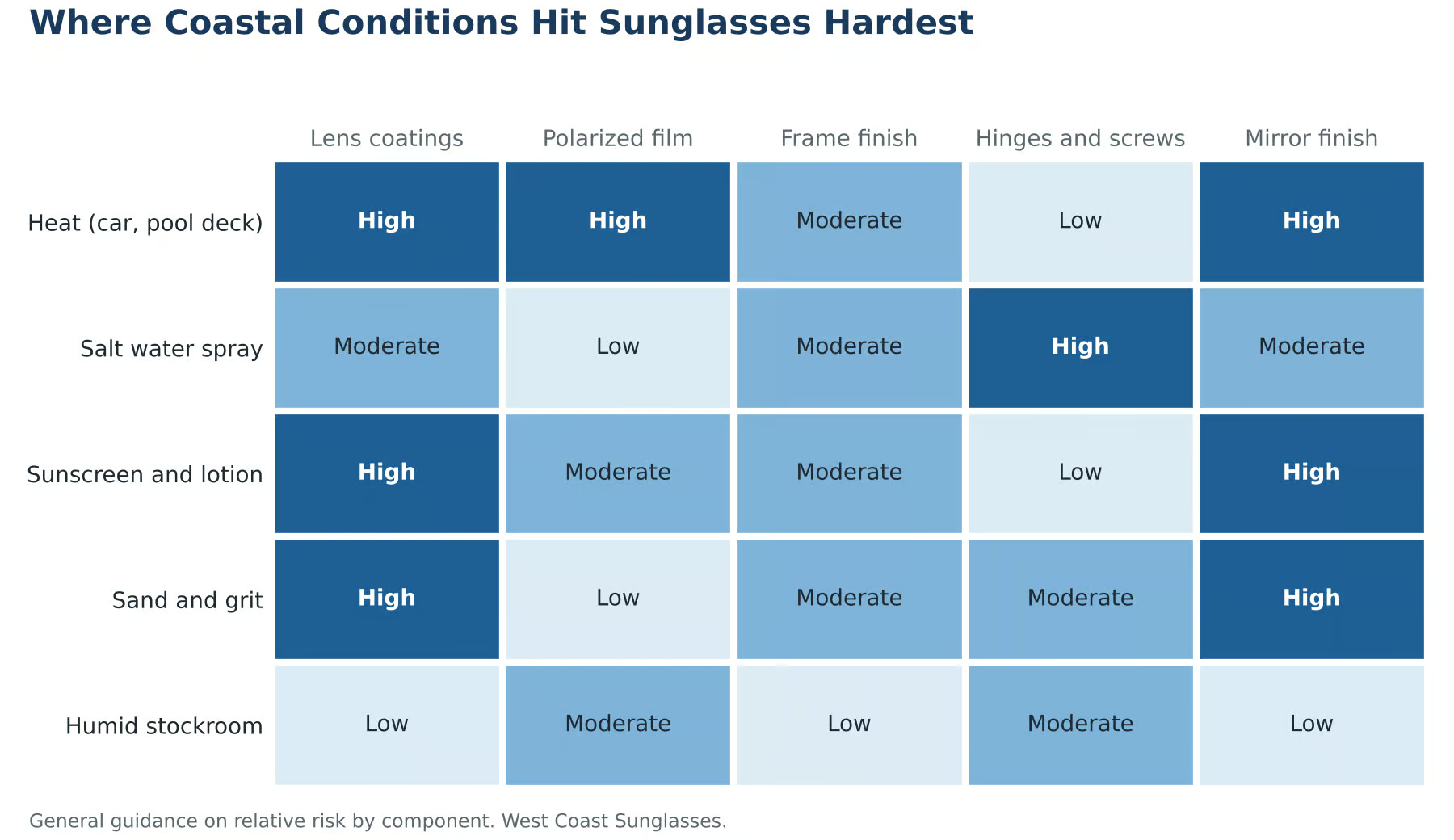
Most damage to sunglasses near the water is not dramatic. A pair rarely snaps in half. Instead, it degrades through small, repeated exposures that add up quickly over a week of vacation use. Understanding the five main culprits helps buyers choose styles that resist them.
Heat
Heat is the most common cause of lens damage. Coatings and lens material expand at different rates when they get hot, which can lead to crazing, a fine spiderweb of cracks across the coating. Heat can also damage the film layer in polarized lenses. Car dashboards, pool decks, and beach bags left in the sun are the usual suspects.
Salt Water
Salt spray dries into a white crust on lenses and works its way into hinges and screws. Left alone, salt residue can wear on surface coatings and corrode metal hardware. The fix is easy, a fresh water rinse, but only if the guest knows to do it.
Sunscreen, Lotion and Bug Spray
Sunscreen, alcohol based products, hand sanitizer, and DEET based bug spray can all attack lens coatings and cause spotting, crazing, or peeling if they are not cleaned off soon after contact. Every guest in a waterfront environment has at least one of these on their hands most of the day.
Sand and Grit
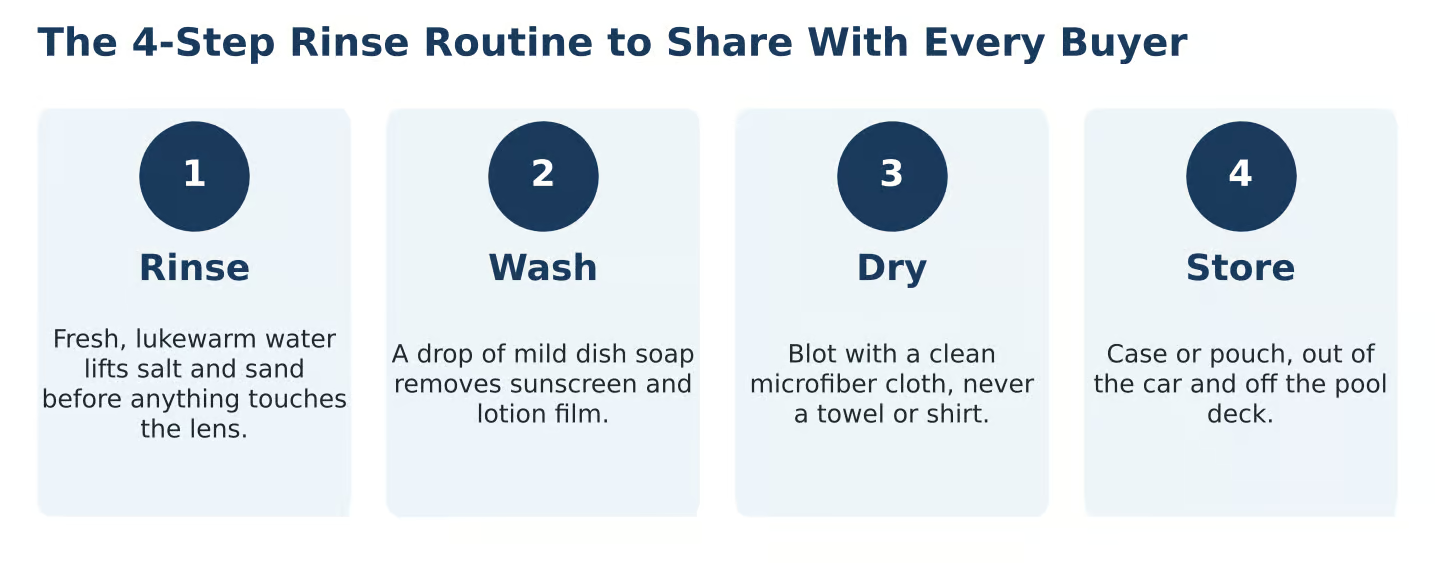
Sand is abrasive. Wiping a dry, sandy lens with a shirt or beach towel is the fastest way to scratch it, and mirrored finishes show scratches more than any other lens type.
Humidity in Storage
Humidity is a stockroom problem rather than a guest problem. Cartons stored in a hot, damp back room can lead to corroded hardware and damaged packaging before a pair ever reaches the display.

Product Features That Hold Up Best
When building a coastal assortment, a few construction details separate styles that survive a vacation from styles that come back to the counter. Use the table below as a quick checklist when reviewing the catalog or talking with your rep.
| Feature |
Why It Matters Near the Water |
What to Look For |
| Polycarbonate (PC) lenses |
Impact resistant and lightweight, so a pair that hits a pool deck or boat floor survives |
PC lenses with UV400 protection, like our Polarized Collection |
| PC or stainless steel frames |
Plastic PC frames will not rust, and stainless steel resists corrosion better than plain metal |
PC frames for active use, stainless options such as Mia Nova for a premium tier |
| Water ready lens coatings |
Hydrophobic coatings help water bead and roll off instead of drying into spots |
Lines built for the water, like Hawaiian Island Creations with Hydro coating |
| Wraparound and sport fits |
Stay put during swimming, paddling and boating, which means fewer lost pairs |
Wrap and shield profiles from the West Coast Sport Collection |
| Verified UV protection |
Guests are outdoors all day, often on reflective water and sand |
UV400 labeling and the standards in our UV protection guide |
Polarization deserves a special mention. Polarized lenses cut the reflected glare that bounces off water, sand, and white concrete pool decks, which is exactly what waterfront shoppers struggle with. If you have not already weighed the lens mix for your store, our guide to
polarized vs. non-polarized lenses walks through how to balance the two.
Protect Inventory Before It Reaches the Shelf
Durability starts in the stockroom. A pair that sat in a hot, humid back room for a month can show damage before a guest ever tries it on. A few simple habits keep inventory in sell ready condition.
- Store cartons off the floor and away from exterior walls, where heat and moisture collect.
- Keep stock in a climate controlled space whenever possible, not in a storage shed or next to laundry or pool equipment rooms.
- Rotate older stock forward so the first pairs received are the first pairs sold.
- Place displays out of direct afternoon sun. A spinner sitting in a sunny window heats lenses and fades frame colors over time. Our article on building a sunglasses display that sells covers placement in more detail.
- Inspect cartons on arrival and report any damaged pieces to your rep right away.
Turn the Register Into a Care Counter
The single most effective durability tool costs almost nothing: a short care message at checkout. Most guests have never been told that sunscreen damages lens coatings or that a hot dashboard can ruin polarization. A ten second tip from the cashier, or a small printed card in the bag, prevents a large share of early damage.
That message also builds trust. A guest who hears a helpful care tip feels looked after, and that goodwill carries over to the next visit. Pairing the tip with a microfiber pouch or soft case, where available, gives the guest an easy way to follow it.
How Durability Protects Your Margin
Durable product does more than please guests. It protects the numbers behind the category. Every pair that comes back damaged is a lost sale, a staff interaction, and often a replacement handed over to keep the peace. Our breakdown of
why sunglass returns happen shows how quickly those small losses add up.
| Durability Choice |
Effect on the Guest |
Effect on the Store |
| Polycarbonate lenses and frames |
Pair survives drops on hard surfaces |
Fewer breakage complaints at the counter |
| Corrosion resistant hardware |
Hinges keep working after salt exposure |
Fewer pairs returned as defective |
| Polarized, water ready lenses |
Clear, comfortable vision on the water |
Higher perceived value and stronger reviews |
| Care tip at checkout |
Guest knows how to avoid heat and sunscreen damage |
Lower early damage and repeat visits |
| Climate aware stock storage |
Pairs arrive on the shelf like new |
Less shrink from damaged inventory |
Durability also supports a confident upsell. When staff know which styles are built for the water, they can comfortably steer a guest from a basic pair to a polarized or premium option and explain why it is worth it. That conversation is much easier when the product backs it up.
Building a Coastal Assortment That Lasts
A strong waterfront assortment usually blends three tiers: dependable everyday pairs for the guest who forgot theirs, polarized and sport styles for guests heading onto the water, and a premium tier for guests who want something special. Kids sizes and wider
XL fits round out the mix so every member of a family can find a pair.
When reviewing styles, ask the same questions every time. Will this survive a drop on a tile floor? Will the hinges stand up to salt air? Is the lens rated for full UV protection? Does it come with a pouch or case? Styles that pass those checks are the ones that keep selling season after season. For a broader checklist, see
what makes a sunglass style retail ready.
Frequently Asked Questions
Can sunglasses get damaged by leaving them in a hot car?
Yes. High heat can cause lens coatings to craze and can damage the film inside polarized lenses. Car dashboards are one of the worst places to leave a pair.
Does salt water ruin sunglasses?
Salt water will not ruin a pair right away, but dried salt can wear on coatings and corrode hardware over time. A quick rinse in fresh water after swimming or boating prevents most of that damage.
Is sunscreen bad for sunglasses lenses?
Sunscreen, lotion, hand sanitizer, and DEET based bug spray can all damage lens coatings if left on the lens. Washing with a drop of mild soap and lukewarm water removes them safely.
What lens material is best for active beach and pool use?
Polycarbonate is a strong choice because it is lightweight and impact resistant. Pair it with UV400 protection and polarization for guests who will spend time on or near the water.
Does West Coast Sunglasses offer display programs?
Yes. Free display programs are available. Call 727-530-9260 to talk with the team about display options for your store.
| Stock Sunglasses Built for the Water
West Coast Sunglasses has supplied retailers from our Clearwater, Florida headquarters since 2001, with polarized, sport, premium, kids, and XL collections built for real outdoor use.
Call 727-530-9260 or toll free 866-228-3888, contact our team, or browse the 2026 catalog to build a durable assortment for your shop. |

 That message also builds trust. A guest who hears a helpful care tip feels looked after, and that goodwill carries over to the next visit. Pairing the tip with a microfiber pouch or soft case, where available, gives the guest an easy way to follow it.


 No products in the cart.