

Quick Answer
A retail-ready sunglass style holds up to daily handling, protects the eyes with genuine UV400 or polarized lenses, tracks current trends, fits consistently across every unit, presents well in its packaging and on a display, brands cleanly, offers enough color or style depth to fill a shelf, and can be reordered reliably. Buyers who check all eight boxes before placing an order avoid dead stock and build a sunglasses category that actually turns.
Why This Checklist Matters at the Buying Table
Sunglasses are an impulse category. A shopper picks a pair up, tries it on in a mirror clipped to the display, and decides in under a minute. That means every physical detail of the product, not just the price point, does the selling. A style can look great in a line sheet photo and still underperform on the floor if the hinge feels loose, the lens has a slight warp, or the case looks cheaper than the glasses inside it.
Retailers who build their sunglasses section with a repeatable evaluation process, rather than picking styles on gut feel alone, tend to see faster sell-through and fewer markdowns. The eight features below are the ones that consistently separate a style that reorders from one that sits.
The 8 Features Wholesale Buyers Should Evaluate
Feature | Why Buyers Evaluate It | What Retail-Ready Looks Like |
Frame Durability | Returns and breakage eat margin fast on a fast-moving accessory. | Reinforced hinges, quality PC or metal construction, consistent QC batch to batch. |
Lens Quality (UV400 / Polarization) | Customers ask about UV protection more than any other spec at the counter. | UV400 rated lenses, true polarization where marketed, no distortion at the edges. |
Trend-Accurate Styling | A shape that looked fresh two seasons ago can sit on a shelf today. | Shapes and finishes that track current fashion cycles, not leftover inventory. |
Consistent Sizing & Fit | Inconsistent fit across a run creates fitting-room frustration and slow sell-through. | Uniform temple length, bridge fit, and lens placement across every unit in a style. |
Case, Packaging & Display Fit | Packaging is part of the perceived value the moment a shopper picks it up. | A case, cloth, and packaging that match the price point and fit a counter or spinner display. |
Brand & Logo Presentation | A clean, legible logo signals quality; a sloppy one undercuts it. | Crisp temple branding and consistent placement that reads well in person and in photos. |
Assortment Depth (Color/Style Options) | One-off styles are hard to merchandise; a family of options fills a display and a category. | Multiple colorways or finishes within a style family, so the shelf feels complete. |
Reorder Reliability & Supply Consistency | A bestseller that cannot be reordered is a lost sales line. | A supplier that can restock the same style and color reliably, season after season. |
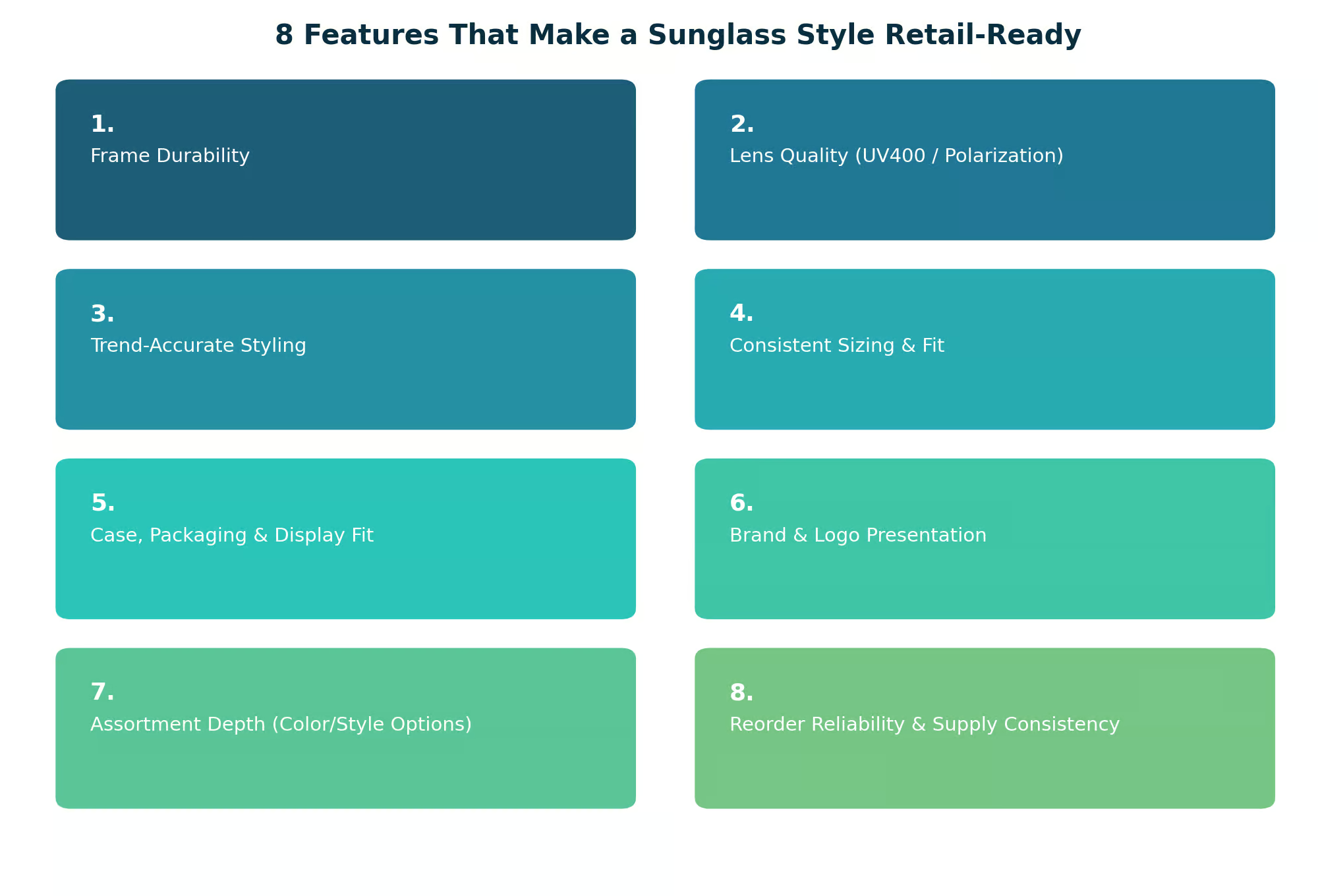
Visual Checklist
Use this as a quick reference when reviewing a line sheet or sample tray before placing an order.
Common Mistakes Buyers Make When Evaluating Styles
Even experienced buyers fall into a few predictable traps when reviewing a sunglasses line sheet. Watching for these can save a season's worth of markdowns.
- Buying on photo alone. A line sheet image cannot show hinge tension, lens clarity, or how a frame actually sits on a face. Whenever possible, request a physical sample before committing to a full case count.
- Chasing a single hot color. A style that only comes in one trending colorway looks great in a photo but leaves a display looking thin once that color starts to sell through.
- Ignoring the case and cloth. Shoppers associate packaging quality with product quality. A premium-feeling frame in a flimsy case can undersell itself at the counter.
- Skipping the reorder conversation. Buyers sometimes place a strong opening order without asking whether the supplier can restock the same style and color later in the season, which leads to gaps on the shelf right when a style is proving itself.
Working through the eight-feature checklist above before placing an order is the fastest way to avoid these mistakes and walk into a buying decision with confidence instead of guesswork.
How to Apply This When You Are Reviewing a Catalog
- Start with the lens. Ask directly whether UV400 protection and polarization (if marketed) are third-party verified, not just printed on the tag.
- Handle the hinge. A stiff or loose hinge on a sample is a preview of what a customer will feel in six weeks of daily use.
- Check the family, not just the hero style. A single standout color rarely fills a display case the way a five- or six-color family does.
- Ask about reorder history. A supplier who can tell you how long a style has been in steady production is telling you it sells.
West Coast Sunglasses builds each collection, including the Vibez Limited Collection, the Polarized Collection, and the Sport Collection, around these same eight checkpoints, so retailers spend less time vetting and more time selling.
A Note on Merchandising
Even a retail-ready style needs the right presentation to perform. Pairing a strong style with a counter or spinner display keeps inventory visible and protected instead of buried in a drawer. A crowded, unorganized bin sells poorly no matter how strong the individual styles are, while a clean display with grouped shapes and colors invites a shopper to try more than one pair, which naturally lifts average sale.
Seasonal rotation matters too. Refreshing which styles sit at eye level as trends shift keeps a regular customer base coming back to see what is new, rather than assuming the case looks the same as it did last visit.
West Coast Sunglasses offers a free display program for qualifying retailers. Details are available on the Sunglasses Displays page.
Frequently Asked Questions
What is the minimum order for wholesale sunglasses?
Order minimums vary by style and program. Reach out to the West Coast Sunglasses team directly for current minimums on any collection.
Do retail-ready styles cost more than basic sunglasses?
Retail-ready simply means the style is built to sell and reorder well. It is a quality and merchandising standard, not a price tier.
Can I mix styles from different collections in one order?
Yes. Most retailers build their opening order across several collections to cover different price points and customer types.
Does West Coast Sunglasses offer display support?
Yes, display programs are available. Details are on the display page and by calling the number below.
Ready to Build a Sunglasses Category That Sells?
The West Coast Sunglasses team can walk you through current collections, help you build a balanced opening order, and answer questions about display support.
Call 727-530-9260 or toll free at 866-228-3888, or contact us online to get started.
Browse the full 2026 Catalog or explore all collections in the Shop.



 No products in the cart.